Meet Bright Ofori
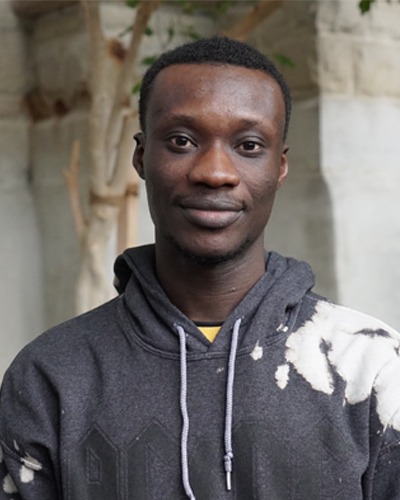
Bright Ofori
Program
First-year PhD student in the Faculty of Health Sciences (Health & Rehabilitation Sciences)
Home Country
Ghana
Involvement with Western International
International student
My research focus
My research looks at HIV among older adults, specifically people aged 50 and above. I’m exploring how aging, HIV, mental health and stigma intersect.
There are studies on aging, and there are studies on stigma, but putting aging, HIV, mental health and stigma together hasn’t been explored as much. Right now, both Canada and Ghana are seeing growing older populations, so I think it’s important that research attention shifts to older adults as well. They are often vulnerable, and we need to understand how best to support them.
I worked on HIV during my master’s degree, but that project focused on young adults. After that, I joined an NIH-funded project in Ghana that looked at older adults living with HIV and comorbidities.
Working on that project for about a year and a half sparked my interest. I realized there wasn’t enough research on older adults living with HIV, so I decided to build on that experience for my PhD.
Why I chose Western and Canada
I was looking at Canada, the US, and the UK for my PhD, but Canada stood out to me. Canadian schools have strong programs, and it’s more possible to secure funding as a PhD student compared to some other countries.
Another important factor was being able to secure a supervisor before arriving. Knowing I already had someone I could work with and speak to made the decision easier. When I compared all those factors, I felt Canada would be a good experience.
Western is where I secured a supervisor, and that became the main reason I came here. Knowing that I already had a supervisor before arriving made a big difference. It meant I had someone I could go to, someone I could speak to, and that gave me confidence about starting my PhD.
I also knew someone here who was already a PhD student, so that connection made it feel less overwhelming. I felt like if I came here, I would have some direction and support.
My Western experience so far
It’s been very positive. When I arrived in August, there was definitely some cultural shock. Things looked different from what I was used to. But I realized I was in a new environment, and I needed to adapt and adjust. I told myself I had to flow with what was happening and make the best of it.
Since I arrived, I’ve felt welcomed by students, lecturers and staff. I haven’t had any negative experiences.
I’ve also tried to get involved outside of academics. I participated in international student photo shoots, attended Global Café and other events, and I’ve become Vice-President of Students and Development for my faculty. I like being involved — it helps me feel connected.
What surprised me most about studying at Western
One big surprise was the structure of graduate studies. When I met my advisor here, he recommended that I take only one or two courses to focus deeply and do well.
At first, I was surprised. But even taking one course, I realized how demanding and detailed it is. It’s a different system — fewer courses, but much deeper engagement.
Another surprise was how informal interactions can be. Professors here may ask you to call them by their first name. That’s not common where I’m from, so it was an adjustment.
My plans for the future
I naturally enjoy teaching and lecturing. After my PhD, I hope to pursue a postdoctoral position and then apply for lectureship roles. I would most likely like to stay in Canada, but I’ll take it step by step.
My advice for new international students
It’s important to focus on your academics, but it’s equally important to connect with people. The people you meet and the networks you build will take you far.
Many international students are here alone, and sometimes it’s difficult to speak to family regularly because of time differences. When you build connections here, it helps you feel welcome and supported. So, I would say: get involved, attend programs, meet people, and integrate yourself into the community.